Market · 7 min read
Nubank Was the Warm-Up. Brazil’s 3rd Financial Revolution Starts Now. (Powered by Stablecoins)
Brazil has already rewritten its financial system twice.
The first revolution didn’t start with a unicorn or a viral campaign. It started with a different idea of what banking could be: cooperative, locally distributed, and built around aligned incentives instead of extraction. That movement grew for more than a century and quietly became a parallel financial system.
The second revolution changed the interface. Nubank made banking feel like software and forced the market to raise its standards, speed, transparency, UX, and trust through product.
Now comes the third wave, deeper than interface, more structural than any single institution.
Here’s the Nora sentence you should remember:
Nora turns Brazil’s sovereign yield into stablecoin savings and deep FX rails that neobanks can ship to millions.
That’s what we’re building with BRS. And that’s why this isn’t “crypto.” It’s Neo Finance.
Why now: the window is open
Brazil is a yield country, but distribution is still trapped inside incumbent plumbing. Meanwhile, neobanks are reaching scale and realizing cards + payments aren’t enough; they need savings and yield to drive AUM, retention, and real LTV.
At the same time, onchain infrastructure is finally mature enough to be used as backend rails instead of an ideological playground, meaning liquidity, settlement, and integration paths can now look like financial infrastructure, not experiments.
This creates a rare timing alignment: yield exists, demand exists, and rails are ready. And importantly, it’s not theoretical demand. We currently have 13 neobanks on our waitlist, 4 more actively testing the private beta, and roughly $200M in expressed demand across the four core products we’re launching.
The first revolution was already massive: credit unions are a parallel system

Most people underestimate how big the credit union movement became in Brazil.
The Banco Central do Brasil’s official SNCC panorama (Dec 2024) puts the cooperative credit system at R$ 885.3B in total assets, R$ 707.9B in funding, and R$ 464.5B in net credit. It also reached 19.2 million members, operated 10,220 service points, and was present in 3,229 municipalities, about 58% of the country.
Converted into a global investor unit of account using the mid-market rate of $1 = R$ 5.19 on February 10, 2026, that’s roughly $170.5B in assets, $136.3B in funding, and $89.4B in credit.
That isn’t “alternative finance.” That is national-scale distribution. And it started with a defiant instinct Brazil has always respected: if the default system doesn’t serve you, you build another one.
One emblematic origin point is Nova Petrópolis, where Sicredi traces the founding of Brazil’s first credit cooperative to December 28, 1902.
Credit unions were the first Brazilian financial revolution because they forced the market to admit a dangerous truth:
the right design can kill monopolies
The second revolution was cultural: Nubank reset expectations
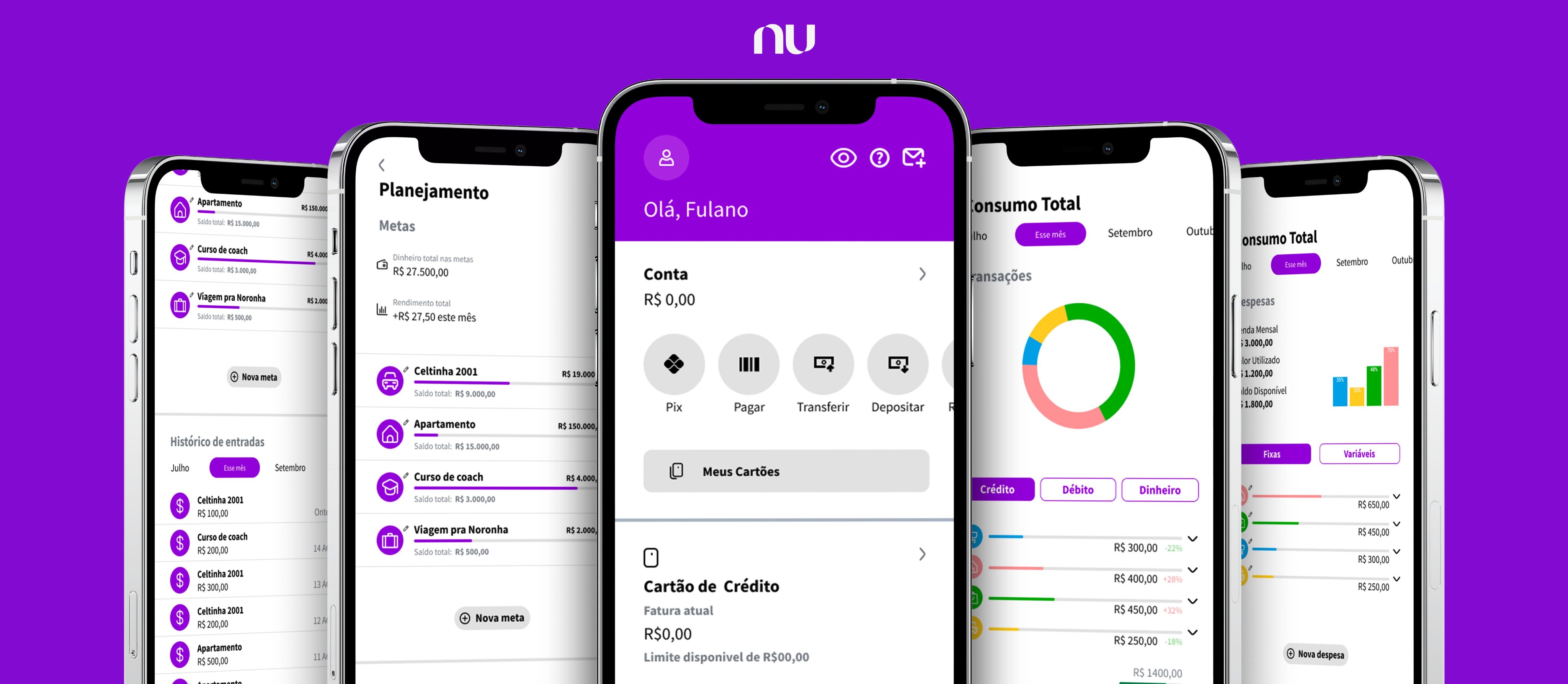
Then Brazil experienced a different disruption: consumer expectation became the battlefield. Nubank didn’t need to own the entire system to change it, it changed what people expected from finance, and incumbents had to react.
But interface has limits.
FX is still expensive in the wrong places. Liquidity is still fragmented. The structural “spread reality” of Brazilian finance doesn’t disappear because the app is prettier.
To change that layer, you need to rebuild rails.
The third revolution is here: a rail reset, not an interface upgrade

Nora isn’t here to cosplay “crypto.” Nora is here to remove the privilege of incumbents being the default, and force the market to evolve by creating better primitives that any modern financial app can distribute.
The market is big enough to justify that ambition. Brazil’s corporate hierarchy remains heavily bank-weighted. For example, @itau Unibanco was reported as the most valuable company on B3 in 2025, surpassing Petrobras at R$ 416.4B (about $80.2B at the same Feb 10, 2026 FX rate).
So we’re building the lever that moves the system.
And here’s the thesis again, because repetition is strategy:
Nora turns Brazil’s sovereign yield into stablecoin savings and deep FX rails that neobanks can ship to millions. It's a design edge.
How Nora works
BRS is the BRL unit onchain. Neobanks distribute BRS through a wrapped savings-account experience that users already understand. Liquidity partners deepen BRL/USD liquidity so ramps can route FX efficiently, and so onchain BRL stops being thin and fragile.
Then the yield engine does what incumbents do best: monetize float, but with modern distribution and programmable settlement. The result is simple: neobanks get a must-have savings product, ramps get cheaper BRL/USD routes, and the entire Brazilian onchain economy gets a real liquidity layer to build on.
That’s why the traction signal matters: 13 neobanks waiting, 4 already testing, and ~$200M in demand for what we’re building. The ecosystem is pulling this into existence.
The products, in the most technical way we can say without giving away the secret sauce
Nora is architected as a modular BRL stablecoin + yield + liquidity stack: an issuance layer (deterministic mint/burn flows, controlled minter roles for select partners, and policy-driven supply expansion), a reserve and yield layer (BRL-denominated sovereign carry with a systematic hedge overlay to neutralize currency risk for USD products), and a liquidity layer (deep BRL/USD routing via onchain FX primitives and integration paths for market makers and lending venues).
On top of that, we deploy structured vaults that (i) transform reserve yield into consumer-grade “savings” exposure, (ii) allocate incentives and liquidity provisioning through parameterized constraints and risk limits, and (iii) expose integrations through clean interfaces so neobanks and ramps can embed the system without becoming DeFi power users. The design goal is to make the system capital-efficient, liquidity-aware, and composable.
Why Nora is beneficial for the entire ecosystem
Neobanks win because they finally have a true must-have product. Most neobanks eventually hit the same wall: cards and payments commoditize, CAC rises, and retention becomes fragile. Savings is the next natural building block.
Nora enables a wrapped savings-account experience with two flagship directions: a BRL product with minimum 18% APY in BRL, and a USD product with 10% APY in USD backed by hedged Brazilian T-bill exposure, designed so foreign users can access yield without taking BRL FX risk.
We’re building an engine where those targets are grounded in real market mechanics, not marketing.
Ramps win because routing efficiency improves. Nora is designed to make BRL/USD routing deeper and more efficient, with an ambition to drive FX costs down to sub-10 bps in the right corridors as liquidity scales. For select ramps, access to the BRS minter path can further improve routing economics and reliability.
Other BRL stablecoins win because the market becomes real. Brazil doesn’t need one BRL stablecoin. It needs a real onchain BRL market. When BRL liquidity deepens, swaps get cleaner, price discovery improves, and builders stop treating BRL as fragile.
Brazilian RWA tokenizers win because they can offer BRL-native products without forced USD exposure. With BRS and a proper liquidity layer, tokenizers can issue BRL-denominated RWAs, settle in BRL, and pay in BRL, giving users access to yield without mandatory dollarization.
The sovereign yield ecosystem wins because distribution expands. Credit unions expanded access through cooperative distribution. Nora expands access through APIs, stablecoins, and liquidity, turning sovereign yield into programmable primitives that can be shipped at internet scale.
VCs win because this is scalable, revenue-efficient infrastructure with a path to profitability. Nora is built around float economics, distribution partners, and infrastructure that compounds with usage. As the system scales, efficiency improves; as efficiency improves, defensibility strengthens.
What’s next
We’ll be announcing more developments of our seed round soon, including a joint venture and an equity swap. Not for press, for alignment, distribution, and speed.
Credit unions were Brazil’s first financial revolution. Nubank was the second. Nora is the third, because we’re rewriting rails, not just the interface.
We’re not here to “kill banks.” We’re here to do something more inevitable:
force them to evolve.
If you run a neobank, a ramp, a BRL stablecoin, or a Brazilian RWA tokenization platform, you’re not “the audience.”
You’re the ecosystem.
We are here for Neo Finance, so DeFi stops being a niche and becomes the backend of Brazil.
Publicado originalmente em https://x.com/cioffi_victor/article/2021286490593017983